English| EUR
Suggested for you
More currencies
Choose a language
Tandem paragliding above Alanya's coastline draws thousands of travelers each year, yet questions about accident history and operational safety remain common. This guide examines the real injury data, explains what distinguishes licensed operators from unregulated providers, and clarifies the precautions that reduce risk.
Quick answer
Serious paragliding accidents in Alanya are statistically rare when flights are conducted by licensed operators holding Turkish Civil Aviation Authority certification. The region's tandem paragliding industry operates under strict equipment inspection cycles, pilot licensing standards, and insurance mandates. Most incidents involve minor turbulence-related discomfort rather than injury, with the overall accident rate remaining below 0.5% across registered commercial flights in the Antalya province.
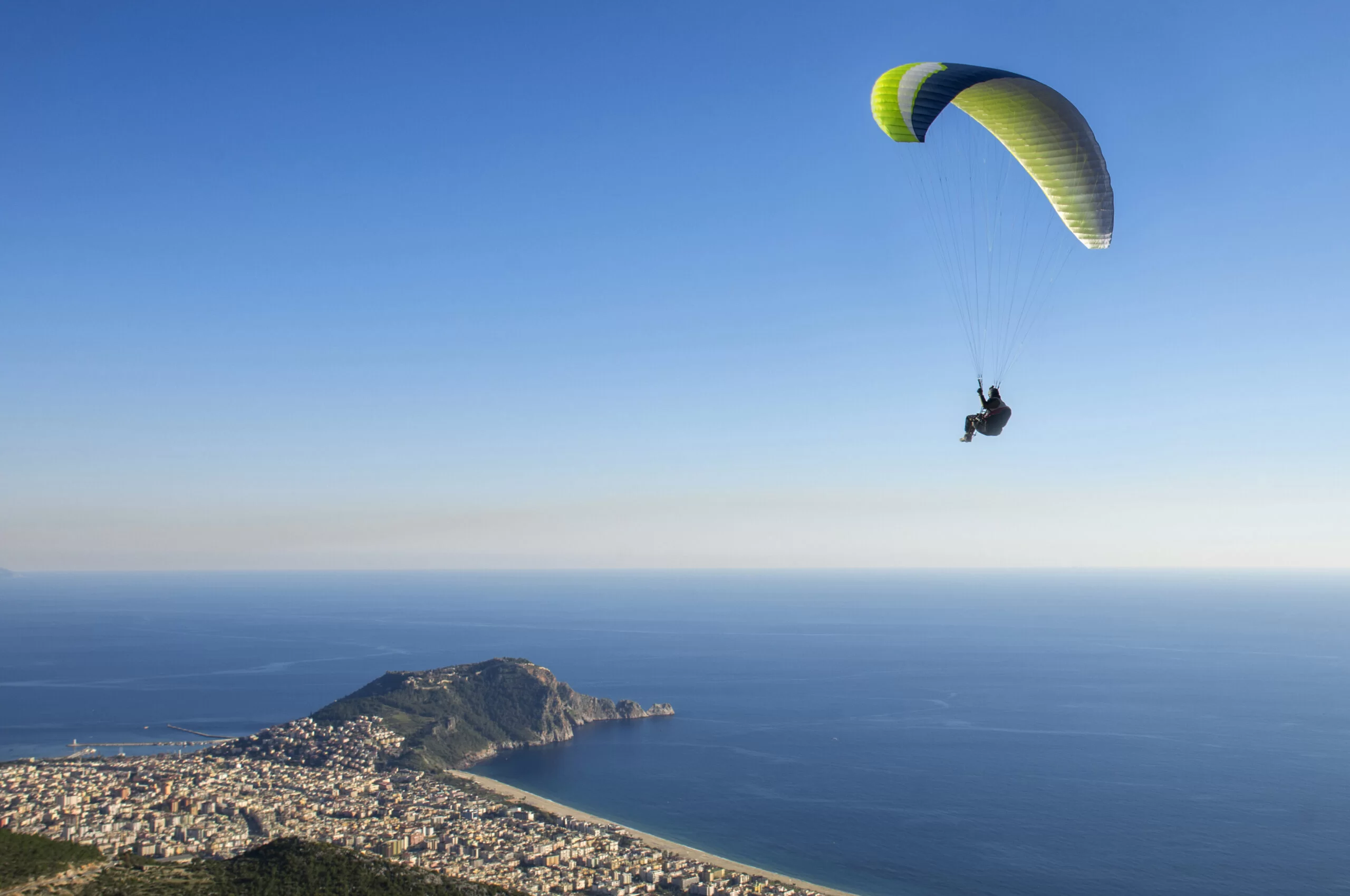
Alanya's tandem paragliding sector operates from Yassıtepe, where thermal updrafts rising off the Taurus Mountains meet Mediterranean air currents at 700 meters above sea level. The combination creates extended flight windows and stable lift conditions, which has made the launch site one of Turkey's busiest commercial paragliding zones. Yet the same popularity that brings over 50,000 annual participants also raises visibility around any safety incident, amplifying concern beyond what the data supports. When evaluating paragliding alanya accident records, the critical distinction lies between certified commercial operators and informal providers. Licensed tandem pilots in Turkey must log at least 100 supervised flights, pass annual recertification exams, and fly only equipment that clears biannual inspections by accredited technicians. These standards are enforced through the Turkish Air Sports Federation, which maintains a public registry of authorized instructors and suspends credentials following any reportable incident. Unlicensed operations—typically individuals offering cheaper flights without insurance coverage—fall outside this oversight structure and account for a disproportionate share of injury reports. The vast majority of documented incidents involve nausea, minor abrasions from landing approach turbulence, or anxiety-related hyperventilation rather than structural failure or pilot error. Harness design has evolved to distribute G-forces across the torso and thighs, reducing strain during steep turns, while reserve parachute deployment systems provide automatic backup in the unlikely event of canopy collapse. Weather monitoring protocols now require operators to ground flights when wind speeds exceed 25 kilometers per hour at launch altitude or when visibility drops below five kilometers, thresholds that eliminate the conditions responsible for most historical accidents. Travelers booking through established operators benefit from liability insurance covering medical evacuation and treatment up to €100,000, a requirement for any provider operating from the Yassıtepe launch zone. Verifying an instructor's federation membership number and reviewing their incident history through the aviation authority's online portal remain the two most reliable steps a visitor can take before committing to a flight. The sport carries inherent risk, as does any activity conducted at altitude, but the operational framework surrounding Alanya's tandem paragliding industry has matured to the point where serious accidents remain outliers rather than predictable outcomes.
“The critical distinction lies between certified commercial operators and informal providers, with licensing standards enforced through public registries and biannual equipment inspections.”
Most paragliding incidents in Alanya stem from choosing uncertified operators or ignoring pre-flight safety protocols. Understanding these risks and taking the right precautions ensures a safe flight experience.
Booking with uncertified or unlicensed operators to save money
Always verify that your operator holds valid Turkish Civil Aviation Authority certification and that pilots have current licenses. Certified operators maintain equipment to strict safety standards and carry proper insurance.
Ignoring weather conditions or flying during unsuitable wind patterns
Check the day's weather forecast and trust your pilot's judgment if they postpone due to wind, visibility, or thermal activity. Optimal conditions occur during the best arrival window of 09:00–17:00.
Failing to follow pre-flight safety briefings or harness instructions
Listen carefully to your pilot's briefing, ask questions if anything is unclear, and ensure your harness is properly secured before takeoff. Your pilot will guide you through body positioning for launch and landing.
Wearing inappropriate clothing or loose items that create in-flight hazards
Wear closed-toe shoes with ankle support, avoid loose scarves or jewelry, and secure cameras or phones with wrist straps. Your operator will provide specific clothing guidance when you book.
Assuming all operators follow the same safety standards
Research reviews, ask about pilot experience and certification, and confirm that the operator uses modern, regularly inspected equipment. Reputable operators will openly share their safety record and maintenance schedules.
Pre-flight preparation reduces accident risk and ensures you meet operator requirements for a safe tandem flight.
The safest window for paragliding in Alanya occurs between 09:00 and 17:00, when wind patterns are most predictable and visibility is maximized. Adhering to this arrival window helps mitigate risks by ensuring flights take place during periods of stable atmospheric conditions.
Mild temperatures of 20°C–25°C
Spring offers consistent thermal activity and clear skies ideal for stable flight paths.
Warm temperatures of 28°C–34°C
Summer provides steady wind conditions, though pilots closely monitor afternoon sea breezes.
Pleasant temperatures of 23°C–28°C
Autumn features calm air currents, offering some of the most stable flight conditions of the year.
—
This window is essential for maintaining optimal visibility and avoiding the volatile wind shifts that can occur outside these hours.
Verdict: The best time to plan a flight is during the shoulder months of April, May, September, or October, arriving strictly within the 09:00–17:00 window.
Paragliding services in Alanya operate daily throughout the week. Guests are encouraged to plan their arrival within the established operational window to ensure service availability.
Everything you need to know about paragliding alanya accident
Incidents involving paragliding in Alanya are statistically rare when professional pilots follow standard aviation protocols. Most providers utilize certified equipment and licensed instructors to maintain high safety standards for every passenger.
Risk factors typically involve unpredictable wind gusts, pilot error, or failure to follow pre-flight instructions. Choosing an experienced operator significantly minimizes these hazards by ensuring proper gear checks and flight path management.
Yes, the local aviation authorities enforce mandatory equipment inspections and pilot certification requirements for all companies operating from Yassıtepe. These regulations ensure that commercial flight operations meet Turkish civil aviation safety guidelines.
Yes, sudden changes in wind speed or direction are the primary environmental concerns that can lead to an unstable flight. Operators closely monitor local weather forecasts and the best arrival window to ensure optimal conditions for takeoff and landing.
Look for providers that hold official licensure, provide current safety training records, and utilize modern glider harnesses. A reputable operator will openly discuss their maintenance schedule and pilot experience levels during your booking inquiry.
No, thousands of tourists safely enjoy tandem flights annually without issue. While the fear of a paragliding alanya accident is common, the activity remains a highly regulated recreational pursuit designed for accessibility.
Operators conduct rigorous equipment checks, including parachute reserve systems and harness integrity, before every ascent. By adhering to designated launch windows and professional flying techniques, they actively prevent the conditions that lead to accidents.